Cold water or hot water
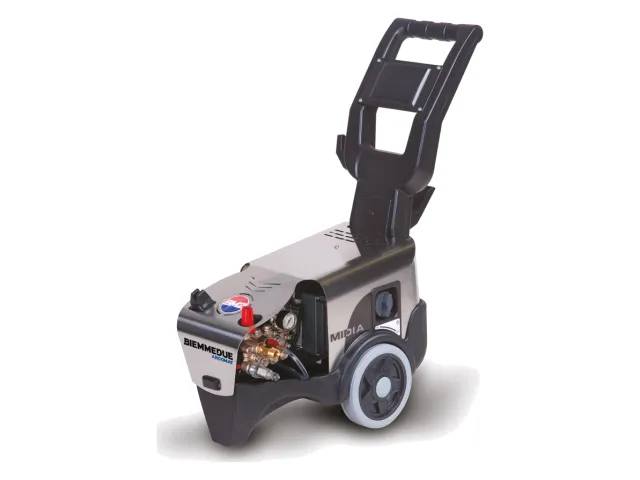
Cold water handles mud, dust, light deposits and routine washing of machinery, façades or paving. The machines are lighter, simpler and have fewer components to maintain. You will find them under cold water pressure washers.
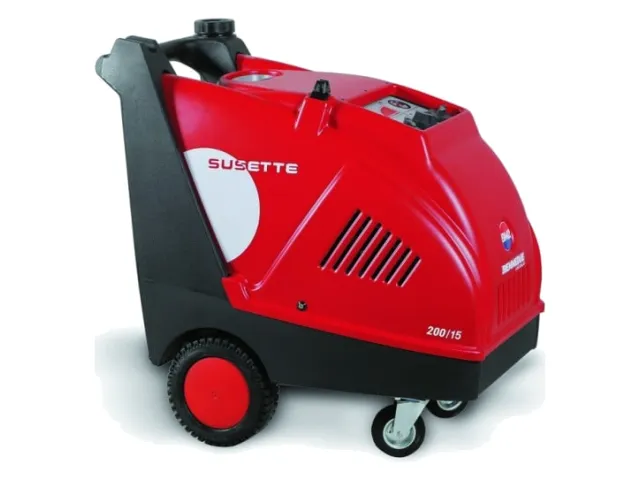
Hot water machines have a boiler, usually diesel-fired, that heats the water after the pump. Grease, oil and organic residues dissolve much faster in hot water, which is why it is the usual choice in vehicle workshops, on farms, in the food industry and for oily machinery. Maximum temperature varies a lot between Biemmedue series: 65–75 °C on the Sally, 130 °C on the Suprema and SPX, 140 °C on the Susette, Super and STX. The Elettra series heats the water electrically, up to 90 °C, with no burner and no flue gases, but it draws 37 kW. The whole range is under hot water pressure washers.
Pressure and flow: read them in the model name
On Biemmedue machines the model name already gives you the two figures that matter. The first number is the maximum pressure in bar, the second the flow rate in litres per minute. A Maxima 200/15 works at 200 bar and 900 l/h (15 l/min). A Maxima 200/30 has the same pressure but 1,800 l/h.
- Pressure breaks up dirt that sticks: dried deposits, caked mud, flaking paint. On cold water machines the range starts at 130 bar and goes up to 500 bar (Magnum 500/15).
- Flow rate decides how quickly the loosened dirt is carried away and how much you rinse per minute. On large surfaces and on agricultural or construction machinery, a high flow rate noticeably shortens the job. On cold water machines the range goes up to 2,460 l/h (Magnum 200/41).
If the machine runs every day for several hours, the pump matters too. The entry-level M series uses axial pumps running at 2,800 rpm, while the professional series use IP pumps running at 1,450 rpm. The total stop system (TS) switches the motor off when you release the trigger. Delayed stop versions (TSD, ACDS2) stop the motor from starting and stopping at every short pause.
Single-phase or three-phase
Single-phase (230 V) models run from any standard socket, which is handy when you work in different places, but their power has a ceiling. In our range, single-phase cold water machines reach at most 150 bar and 600 l/h (for example the Midia 130/10 TS, 2.6 kW), and single-phase hot water machines deliver 480–780 l/h (Sally, Sidra 130/10, Susette 110/13, STX 140/10).
Above 160 bar or above 780 l/h, every model in the range is three-phase (400 V). A Maxima 160/15 draws 4.5 kW, a Maxima 350/15 draws 11 kW. Check the available power and the fuses at the connection point in good time, especially for electrically heated models: the Elettra needs 57 A.
Mobile or stationary
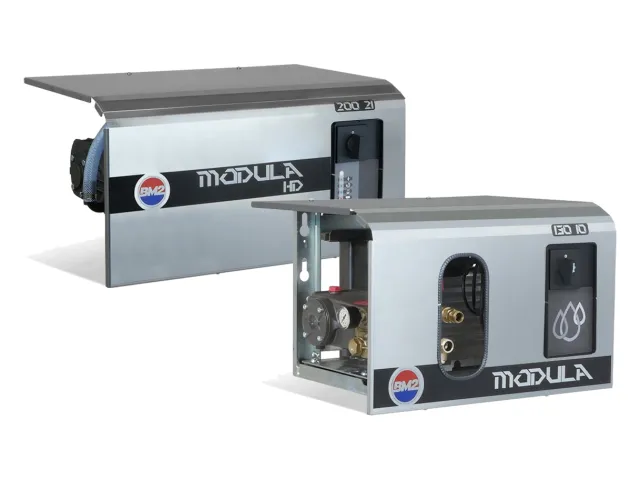
Stationary pressure washers in the Modula series are fixed in place, with a permanent water and power connection, in wash bays, workshops, farms or production sites. They work at 130–200 bar and 600–1,800 l/h. The Modula Plus versions accept inlet water up to 70 °C, and the Modula XT FOOD, made for the food industry, up to 85 °C.
No mains power: engine-driven machines
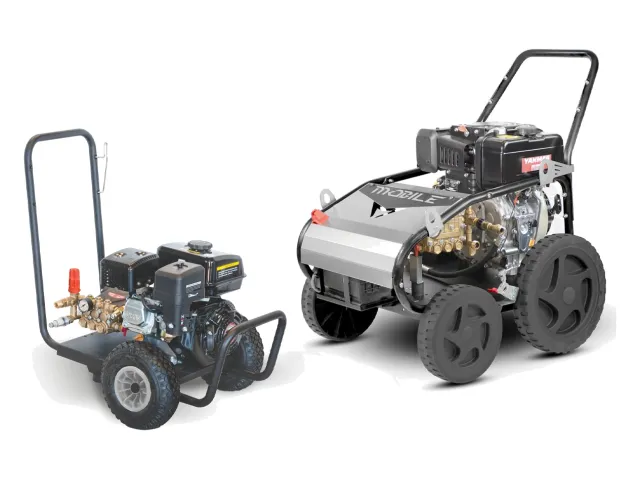
On a building site, out in the field or anywhere without a power supply, you use engine-driven pressure washers. The Mobile series has Honda or Loncin petrol engines (180–250 bar, 720–1,260 l/h) or a Yanmar diesel engine (Mobile 180/21D and 220/15D). The Magnum 4S series, with a Honda GX690 engine, reaches 500 bar. If you need hot water without mains power, there are self-contained diesel-engined models such as the Comby 200/18 D and the Skid 200/15 or 250/15.
Hot water generators
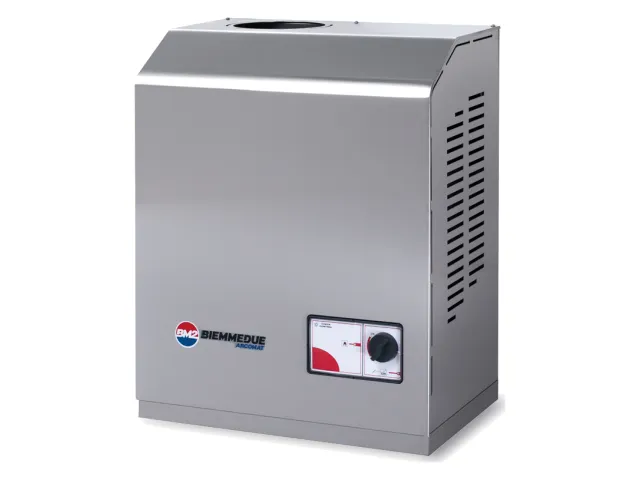
If you already have a cold water pressure washer or a stationary system, you can get hot water by connecting a hot water generator after the pump. The Split T30 and T40 have a diesel burner (63 and 80 kW respectively), heat the water to between 30 and 140 °C and accept inlet pressures up to 250 bar. The Split-E versions are electric, rated 24–48 kW, with a maximum of 90 °C. Watch the pump flow rate: it has to fall within the generator’s range, for example 540–1,260 l/h on the Split T30.
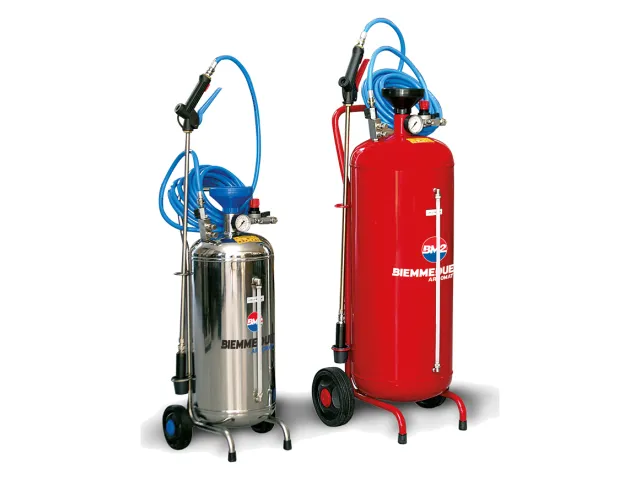
Heavily soiled surfaces benefit from pre-treatment. Minipig foggers spray detergent or foam with compressed air before you pressure wash.
To recommend a set-up, we need to know what you clean, how often, what power supply you have and if you need hot water.