What capacity in l/24 h means
A dehumidifier’s capacity tells you how many litres of water it takes out of the air in 24 hours at a given temperature and relative humidity (RH). Without those conditions the figure tells you very little. Catalogues usually quote the value under favourable conditions, for example 32 °C and 90% RH, where the unit condenses the most water.
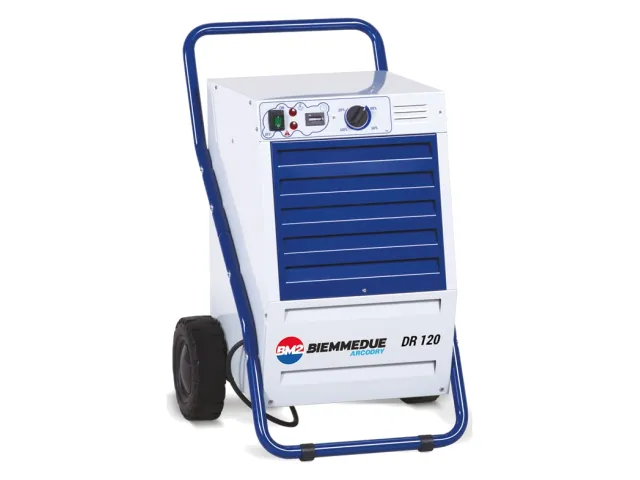
The difference is large. For the ARCODRY Biemmedue professional dehumidifiers, capacity at 32 °C / 90% RH, at 30 °C / 80% RH and at 15 °C / 70% RH looks like this:
- DR 35: 37.78 / 31.32 / 12.85 l/24 h;
- DR 50: 52.39 / 45.08 / 19.80 l/24 h;
- DR 70: 78.92 / 64.20 / 23.56 l/24 h;
- DR 100: 100.80 / 81.78 / 25.63 l/24 h.
So in a cold building at 15 °C, the same unit extracts between 2.6 and almost 4 times less water than under catalogue conditions. Always compare models under the same conditions and size the unit for the real temperature of your space, not for the maximum figure.
The temperature and humidity it works in
Compressor dehumidifiers condense water vapour on a cold heat exchanger. The warmer and more humid the air, the more water they collect. The DR 35–DR 100 models work between 3 and 40 °C and between 20 and 100% RH. At low temperatures the heat exchanger can ice up, so they have automatic hot-gas defrost, which keeps them running in unheated spaces.
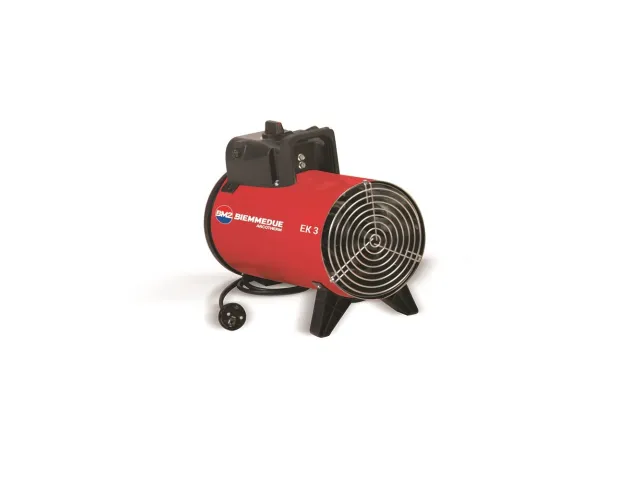
If you have to dry a cold space, warm the air moderately and the unit will extract more water. An electric fan heater adds no moisture. Direct-fired heaters do, because their combustion gases contain water vapour.
Drying out buildings
Fresh screed, plaster and masonry give off a lot of water in the first few weeks. A dehumidifier gets you to laying floors and finishes sooner and reduces the risk of mould. A few things that help in practice:
- keep doors and windows closed as far as you can, otherwise the unit ends up drying the outside air;
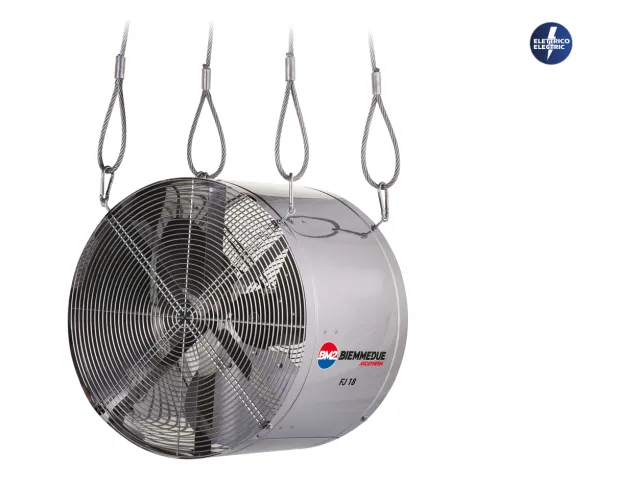
- keep the air moving in the room, for example with an axial fan;
- fit a hose for direct condensate drainage, so the unit runs continuously without you emptying the tank (7 l on the DR 35, 17 l on the DR 50 and DR 70);
- keep an eye on humidity on the display: the DR 35–DR 100 have a built-in digital thermo-hygrometer and an hour counter.
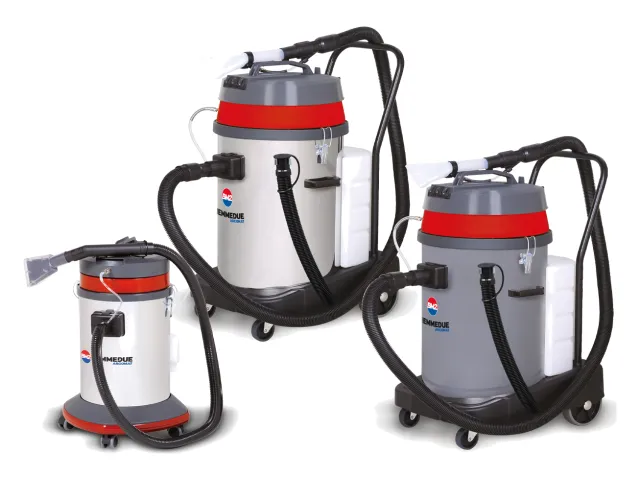
After a flood, standing water is removed mechanically first, for example with a vacuum cleaner with a drain pump. The dehumidifier then deals with the moisture left in the walls and floors.
Warehouses, archives and basements
Here the aim is not fast drying but steady humidity, so it matters that the unit runs on its own without supervision. The DR 35–DR 100 have a programmable auto-off and restart by themselves after a power cut. On the DR 80 and the DR 120–DR 310 series, the built-in humidistat switches the unit on and off automatically. For small rooms, offices or cellars there is the DR 80, a compact, fully automatic unit rated 16 l/24 h.
Other criteria
- Energy use: for the DR 35–DR 100, the manufacturer states 0.37–0.41 kWh per litre extracted (at 32 °C / 90% RH).
- Air flow: from 290 m³/h (DR 35) to 1,000 m³/h (DR 100). Higher air flow deals with large volumes faster.
- Power supply: every model in the range is single-phase, 230 V.
- Transport: the DR 35–DR 100 weigh 40–83.5 kg, have wheels and a telescopic handle and can be stacked.
- Noise: 56–62 dB(A) at 1 m, worth bearing in mind in occupied spaces or offices.
For a recommendation, send us the floor area and height of the space, the usual temperature, what needs drying (screed, plaster, a warehouse, an archive) and how much time you have. We will tell you which model and how many units you need.